porphyry / vein
Molybdenum prospectivityacross Australia, the USA & Canada.
Porphyry and vein molybdenum, ranked and explained across Australia, the United States and Canada.
-
 ✓
✓ Australia
Ranked targets
-
 ✓
✓ United States
Ranked targets
-
 ✓
✓ Canada
Ranked targets
- ·
Everywhere else
Not modelled
Ranked targets come with national models in Australia, the United States and Canada. Next, the models are retrained on the full record and new sources, such as hyperspectral imagery, before we use them to rank and select ground.
How we rank molybdenum ground
From a country to a decision.
- 01 · Atlas
Know the ground
The geology, structure, recorded deposits, tenure and geochemistry over the ground, on one map with the source of every layer.
See Atlas - 02 · Open Ground
Find ground you can peg
Which ground is open, held or excluded, read from each licensing authority's own register.
See Open Ground - 03 · Prospectivity
Rank it for molybdenum
The ground scored for molybdenum, with the evidence behind it and ranked targets in Australia, the United States and Canada.
See Prospectivity - 04 · Spectral
Map the alteration
The alteration minerals and the structures that control them, from satellite: regional to district scale, and camp scale from WorldView-3.
See Spectral - 05 · Due Diligence
Check before committing
Tenure, land access, environment and the real cost to hold and test a molybdenum position.
See Due Diligence -
Talk to us about molybdenum
Partners, investors, publishers and researchers.
The deposit system
The molybdenum system.
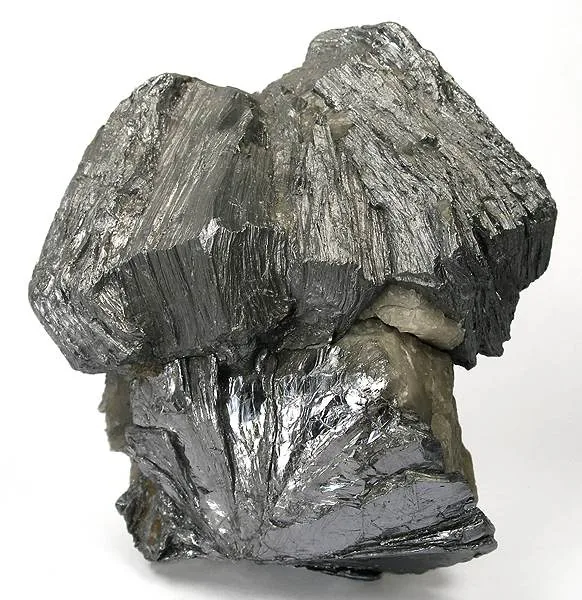
Molybdenum is a refractory transition metal valued for the strength, hardness and heat resistance it confers on steel and specialty alloys. In nature it occurs chiefly as molybdenite, a molybdenum sulphide, and it is recovered both as the primary product of Climax-type porphyry molybdenum systems and as a by-product of porphyry copper mining.
Read more: the deposit model, why it matters and where it is used +
More on molybdenum
MineDSS models molybdenum through two deposit systems: porphyry and vein molybdenum systems. Each is associated with felsic intrusions, hydrothermal alteration and structurally focused sulphide mineralisation. These processes leave a mappable footprint: altered and veined intrusive rocks, characteristic geophysical responses and a distinctive multi-element geochemical halo. That is exactly the pattern a prospectivity model is built to read across large, partly covered terrains.
The deposit model
Porphyry molybdenum systems form above felsic to intermediate intrusions emplaced at shallow crustal levels, where fluids exsolving from the cooling magma deposit molybdenite in dense quartz stockwork veins within and around the causative pluton. Vein systems concentrate the same mineralisation along faults, fractures and greisen zones on the margins of granitic bodies. Both are marked by potassic and phyllic alteration, silicification and zoned sulphide assemblages.
Why it matters
Molybdenum is a strategic industrial metal and features on critical-minerals lists in several jurisdictions. It is essential to high-strength, corrosion-resistant and high-temperature steels used in energy infrastructure, transport and defence, and demand is reinforced by the buildout of pipelines, power generation, chemical processing and clean-energy technologies. Because much production comes as a by-product of copper, its supply is partly tied to copper markets, which sharpens interest in primary molybdenum sources. Reliable identification of prospective ground supports secure, diversified supply for both enterprise and government stakeholders.
Where it's used
The dominant use of molybdenum is as an alloying element in steel and cast iron, where it raises strength, hardenability, toughness and resistance to corrosion and high temperature. It is central to stainless and tool steels, and to nickel- and cobalt-based superalloys for aerospace and power generation. Molybdenum compounds also serve as industrial catalysts (notably in petroleum refining and desulphurisation) and as high-performance lubricants, pigments, corrosion inhibitors and specialty chemical feedstocks.
Questions
Molybdenum: common questions.
Which molybdenum deposit types does MineDSS model? +
MineDSS models two deposit systems: porphyry and vein molybdenum systems. Porphyry systems host molybdenite in quartz stockwork veins above shallow felsic intrusions, while vein systems concentrate mineralisation along faults, fractures and greisen zones on granitic margins. Molybdenum is won both as the primary metal of Climax-type porphyry molybdenum deposits and as a by-product of porphyry copper, and both routes fall within these systems. The model does not attempt to represent unrelated deposit styles; it ranks ground by how closely its evidence matches ground where samples assay anomalously high for the target mineral.
How is the model tested, and where can I run molybdenum? +
Every MineDSS model is tested before it is served: we withhold whole blocks of ground, rebuild the model without them, and check that it still ranks the anomalous samples there above background, with test ground kept spatially separate. A model that does not pass our release gates is not used, for any mineral, in any country. National models for molybdenum run in Australia, the United States and Canada, with ranked targets. Molybdenum is not modelled outside those countries. Skill is model-level, never a specific site's measured accuracy, and never a discovery or JORC / NI 43-101 resource claim.
How should I read a MineDSS prospectivity score? +
A MineDSS score ranks ground by how strongly its evidence (geology, geophysics, terrain and satellite alteration) matches the ground where samples assay anomalously high for molybdenum. It is a relative ranking for prioritising exploration: not a discovery, not a JORC or NI 43-101 resource estimate, and not drilling or investment advice. Read it together with the analogue-support class on each target: a high score on a strong match is a lead to take seriously; a high score on unproven ground is a prompt to collect field samples first.
Which pathfinder elements track molybdenum? +
The classic pathfinders are copper, tungsten, bismuth, tin, lead and zinc, with copper, tungsten and bismuth leading for porphyry and vein systems. These elements reflect the intrusion-related, greisen and sulphide associations typical of molybdenite mineralisation. These elements are part of the geochemical record our models learn from. In a run on any piece of ground, the map itself is read from geology and rock age, gravity and magnetics, radiometrics, terrain, satellite radar and spectral alteration, so it covers ground that has never been sampled.
-
Partners
Exploration and mining companies interested in working with us.
-
Investors
The record, the models and the ground they point to.
-
Publishers and researchers
Geological surveys, universities and programmes whose work the record is built on.
MineDSS ranks prospectivity to help you decide where to explore next. It is not a discovery, not a JORC or NI 43-101 resource or reserve estimate, and not drilling or investment advice.