sediment-hosted / vein
Barium prospectivityacross Australia, the USA, Canada & worldwide.
Sediment-hosted and vein barite, ranked and explained across Australia, the United States and Canada.
-
 ✓
✓ Australia
Ranked targets
-
 ✓
✓ United States
Ranked targets
-
 ✓
✓ Canada
Ranked targets
- ✓
Everywhere else
Global model
Ranked targets come with national models in Australia, the United States and Canada. Everywhere else, the global model returns the prospectivity map, the geology behind it and a confidence read. Next, the models are retrained on the full record and new sources, such as hyperspectral imagery, before we use them to rank and select ground.
How we rank barium ground
From a country to a decision.
- 01 · Atlas
Know the ground
The geology, structure, recorded deposits, tenure and geochemistry over the ground, on one map with the source of every layer.
See Atlas - 02 · Open Ground
Find ground you can peg
Which ground is open, held or excluded, read from each licensing authority's own register.
See Open Ground - 03 · Prospectivity
Rank it for barium
The ground scored for barium, with the evidence behind it and ranked targets in Australia, the United States and Canada. Anywhere else, the global model maps barium.
See Prospectivity - 04 · Spectral
Map the alteration
The alteration minerals and the structures that control them, from satellite: regional to district scale, and camp scale from WorldView-3.
See Spectral - 05 · Due Diligence
Check before committing
Tenure, land access, environment and the real cost to hold and test a barium position.
See Due Diligence -
Talk to us about barium
Partners, investors, publishers and researchers.
The deposit system
The barium system.
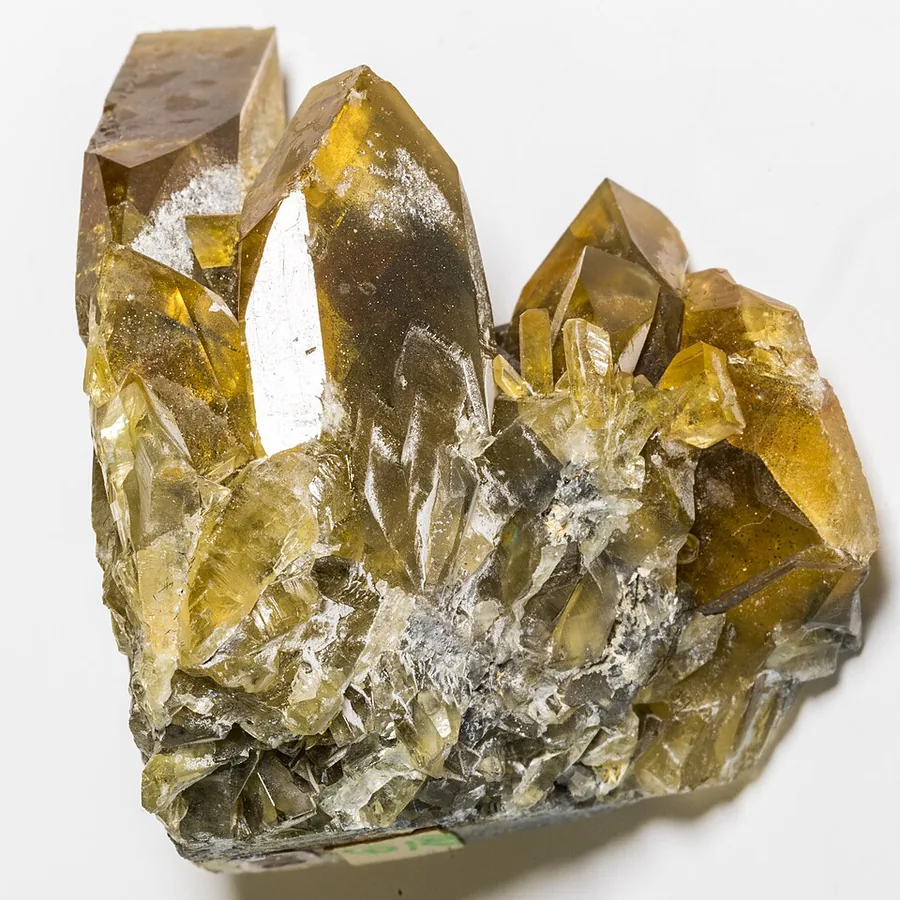
Barium is a soft, silvery alkaline-earth metal too reactive to occur natively; in economic concentration it is won almost entirely as barite, its dense barium sulphate ore, with witherite, a barium carbonate, a lesser source. Barite is the heaviest common non-metallic mineral, and that exceptional specific gravity underlies most of its value.
Read more: the deposit model, why it matters and where it is used +
More on barium
MineDSS models barium through two deposit families: sediment-hosted (bedded) and vein barite systems. Each concentrates barite where barium-bearing fluids meet sulphate, whether in marine basinal muds or along faults and fractures, leaving a mappable footprint of altered and mineralised host rock, characteristic geophysical contrast and a distinctive multi-element geochemical halo, exactly the pattern a prospectivity model is built to read across large, partly covered terrains.
The deposit model
Bedded sediment-hosted deposits, the dominant source of world barite reserves and production, form on continental margins and in cratonic rift basins where high marine productivity drives barium into organic-rich sediment; barium then combines with sulphate derived from seawater and decaying organic matter and precipitates as nodular, rosette and bedded barite within black shale, mudstone and chert, in basins that frequently also host stratiform lead-zinc-silver sulphide mineralisation of the sedimentary-exhalative family. Vein and cavity-fill systems are epigenetic: low-temperature basinal brines migrate along faults, fractures and breccia zones and deposit barite with fluorite, calcite, quartz and Mississippi Valley-type galena and sphalerite.
Why it matters
Barite carries strategic weight because it has no economic substitute in the application that consumes most of it. It is classified as a critical mineral in the United States, where domestic output, drawn largely from Nevada bedded barite districts, has declined for decades and supply now leans heavily on imports. Its importance is tied to the energy sector: barite is the standard weighting agent in the drilling fluids used to sink oil and gas wells, so demand tracks drilling activity and the security of that supply chain matters to operators and governments alike. Beyond energy, barium chemicals reach paints, plastics, glass and medical imaging. Transparent, defensible targeting of prospective ground supports secure, diversified supply for enterprise and government stakeholders.
Where it's used
More than nine-tenths of barite is consumed as a weighting agent in drilling fluids, where its high density and chemical inertness let engineers control downhole pressure and guard against blowouts, a role no cheaper mineral matches. The remainder is processed into barium chemicals and fillers. Barium sulphate is a bright, inert filler and extender in paints, coatings, plastics, paper and rubber, and a radiocontrast agent for gastrointestinal X-ray and CT examinations. Barium carbonate feeds specialty glass, ceramic glazes, bricks and tiles, removes sulphate from industrial brines and colours pyrotechnics green. Barium ferrite serves permanent magnets, giving the element a footprint across energy, construction, healthcare and manufacturing.
Questions
Barium: common questions.
Which barium deposit types does MineDSS model? +
MineDSS models two deposit systems: bedded sediment-hosted and vein barite systems, covering barium's principal ore mineral, barite (barium sulphate). Bedded deposits form in marine basins where barium precipitates as nodular and layered barite within black shale, mudstone and chert, and they account for most of the world's barite reserves and production. Vein and cavity-fill deposits are epigenetic, precipitating barite with fluorite, calcite and Mississippi Valley-type lead-zinc sulphides along faults and fractures. The model does not attempt unrelated styles; it ranks ground by how closely its evidence matches ground where samples assay anomalously high for the target mineral.
How is the model tested, and where can I run barium? +
Every MineDSS model is tested before it is served: we withhold whole blocks of ground, rebuild the model without them, and check that it still ranks the anomalous samples there above background, with test ground kept spatially separate. A model that does not pass our release gates is not used, for any mineral, in any country. National models for barium run in Australia, the United States and Canada, with ranked targets. Anywhere else in the world, the global model returns the prospectivity map, the geology behind it and a confidence read. Skill is model-level, never a specific site's measured accuracy, and never a discovery or JORC / NI 43-101 resource claim.
Which pathfinder elements track barium? +
The classic pathfinders are lead, zinc, silver, strontium, arsenic, antimony and thallium, with lead, zinc and silver leading for barite's association with base- and precious-metal sulphides. Strontium substitutes for barium within the barite lattice and directly traces its chemistry, while arsenic, antimony and thallium mark the low-temperature, sediment-hosted conditions in which bedded barite forms. These elements are part of the geochemical record our models learn from. In a run on any piece of ground, the map itself is read from geology and rock age, gravity and magnetics, radiometrics, terrain, satellite radar and spectral alteration, so it covers ground that has never been sampled.
Does a high MineDSS score mean a barium deposit or a resource estimate? +
No. A high score means its evidence closely matches ground where samples assay anomalously high for the target mineral, and it warrants closer exploration attention. It is not a discovery, not a JORC or NI 43-101 resource or reserve estimate, and not drilling or investment advice. The model is trained to flag anomalous barium geochemistry, samples assaying at or above about 2,000 ppm barium; confirming whether barite is actually present, and in what quantity, grade and quality, still requires field programmes, drilling and independent assessment by qualified professionals.
-
Partners
Exploration and mining companies interested in working with us.
-
Investors
The record, the models and the ground they point to.
-
Publishers and researchers
Geological surveys, universities and programmes whose work the record is built on.
MineDSS ranks prospectivity to help you decide where to explore next. It is not a discovery, not a JORC or NI 43-101 resource or reserve estimate, and not drilling or investment advice.