epithermal / vein
Silver prospectivityacross Australia, the USA, Canada & worldwide.
Epithermal and vein silver, ranked and explained across Australia, the United States and Canada, and available worldwide.
-
 ✓
✓ Australia
Ranked targets
-
 ✓
✓ United States
Ranked targets
-
 ✓
✓ Canada
Ranked targets
- ✓
Everywhere else
Global model
Ranked targets come with national models in Australia, the United States and Canada. Everywhere else, the global model returns the prospectivity map, the geology behind it and a confidence read. Next, the models are retrained on the full record and new sources, such as hyperspectral imagery, before we use them to rank and select ground.
How we rank silver ground
From a country to a decision.
- 01 · Atlas
Know the ground
The geology, structure, recorded deposits, tenure and geochemistry over the ground, on one map with the source of every layer.
See Atlas - 02 · Open Ground
Find ground you can peg
Which ground is open, held or excluded, read from each licensing authority's own register.
See Open Ground - 03 · Prospectivity
Rank it for silver
The ground scored for silver, with the evidence behind it and ranked targets in Australia, the United States and Canada. Anywhere else, the global model maps silver.
See Prospectivity - 04 · Spectral
Map the alteration
The alteration minerals and the structures that control them, from satellite: regional to district scale, and camp scale from WorldView-3.
See Spectral - 05 · Due Diligence
Check before committing
Tenure, land access, environment and the real cost to hold and test a silver position.
See Due Diligence -
Talk to us about silver
Partners, investors, publishers and researchers.
The deposit system
The silver system.
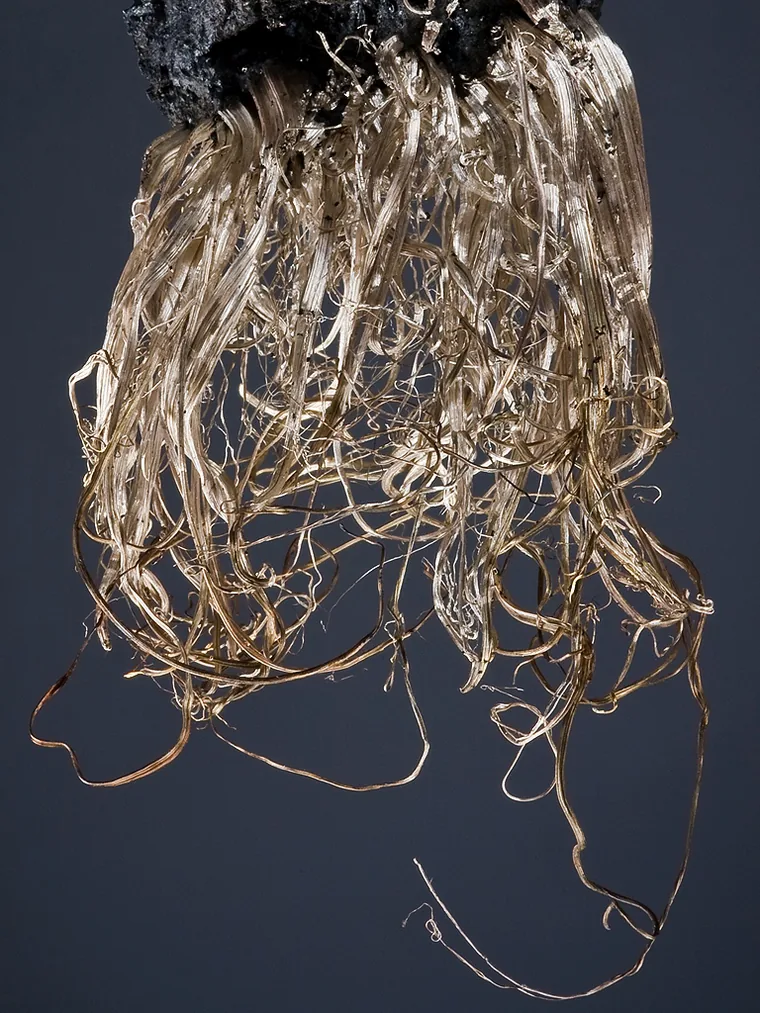
Silver is a precious metal that is also a genuine industrial workhorse, and the two roles keep demand for it broad and persistent. MineDSS focuses on the epithermal and vein systems that host much of the world's primary silver: mineralisation deposited in the shallow crust from hot, circulating fluids, typically in and above volcanic arcs.
Read more: the deposit model, why it matters and where it is used +
More on silver
These are the classic bonanza vein and disseminated deposits, where silver occurs as native metal, argentite and sulphosalts alongside gold and base-metal sulphides. This page covers that epithermal route specifically; the base-metal silver that travels with lead and zinc in SEDEX and VMS settings is a distinct system modelled separately.
The deposit model
Epithermal and vein silver forms at shallow crustal levels, where near-surface hydrothermal fluids deposit metal in veins, stockworks and breccias, most often in felsic to intermediate volcanic and volcaniclastic rocks above active or recently active magmatic systems. Mineralisation is strongly structurally controlled (hosted along faults, fissures and volcanic conduits) and carries a diagnostic alteration halo, from silicification and quartz-adularia through argillic clays to broader propylitic zones. Silver sits with gold, base-metal sulphides and sulphosalts.
Why it matters
Silver occupies an unusual position: a monetary and investment metal with deep, liquid markets, and at the same time an irreplaceable industrial input. That dual demand makes it structurally resilient across commodity cycles. Its industrial pull is increasingly tied to electrification and the energy transition (photovoltaics above all), while investment and monetary demand persist independently. Because much silver is produced as a by-product of gold and base-metal mining, primary epithermal silver remains a distinct and continuously pursued exploration target, keeping the search for new vein systems active across the Americas and Australia.
Where it's used
Silver has the highest electrical and thermal conductivity of any metal, which anchors its industrial use. It is essential to solar photovoltaic cells, printed and flexible electronics, contacts, switches and conductive pastes, and to brazing alloys and high-reliability soldering. Its antimicrobial properties support medical and water-treatment uses, and its optical behaviour serves mirrors, catalysis and specialised coatings, alongside enduring roles in investment bullion, jewellery and silverware.
Questions
Silver: common questions.
Which silver deposit types does MineDSS model? +
This page covers epithermal and vein silver systems: the shallow-crustal hydrothermal deposits, typically in volcanic settings, where silver occurs as native metal, argentite and sulphosalts alongside gold and base-metal sulphides. It is deliberately distinct from base-metal silver, which travels with lead and zinc in SEDEX and VMS settings and is modelled separately as the lead-zinc-silver system, so each is ranked against the geology that actually controls it.
How is the model tested, and where can I run silver? +
Every MineDSS model is tested before it is served: we withhold whole blocks of ground, rebuild the model without them, and check that it still ranks the anomalous samples there above background, with test ground kept spatially separate. A model that does not pass our release gates is not used, for any mineral, in any country. National models for silver run in Australia, the United States and Canada, with ranked targets. Anywhere else in the world, the global model returns the prospectivity map, the geology behind it and a confidence read. Skill is model-level, never a specific site's measured accuracy, and never a discovery or JORC / NI 43-101 resource claim.
Which pathfinder elements track silver? +
A broad epithermal-focused geochemical suite: tellurium, thallium and mercury as the epithermal signature, together with gold, arsenic, antimony, lead, zinc, copper, molybdenum, bismuth, barium, cadmium, sulphur and selenium. These elements are part of the geochemical record our models learn from. In a run on any piece of ground, the map itself is read from geology and rock age, gravity and magnetics, radiometrics, terrain, satellite radar and spectral alteration, so it covers ground that has never been sampled.
Does a high silver ranking mean there is a deposit or a resource? +
No. MineDSS ranks ground by how closely its evidence matches ground where samples assay anomalously high for silver. It highlights where the conditions and footprint are favourable, to help prioritise where to look next. A high ranking is not a discovery, not a JORC or NI 43-101 resource or reserve estimate, and not drilling or investment advice. Ground truth still requires fieldwork, sampling and drilling.
-
Partners
Exploration and mining companies interested in working with us.
-
Investors
The record, the models and the ground they point to.
-
Publishers and researchers
Geological surveys, universities and programmes whose work the record is built on.
MineDSS ranks prospectivity to help you decide where to explore next. It is not a discovery, not a JORC or NI 43-101 resource or reserve estimate, and not drilling or investment advice.