pegmatite / greisen / volcanic-hosted
Beryllium prospectivityacross Australia, the USA, Canada & worldwide.
Pegmatite, greisen and volcanic-hosted beryllium, ranked and explained across Australia, the United States and Canada.
-
 ✓
✓ Australia
Ranked targets
-
 ✓
✓ United States
Ranked targets
-
 ✓
✓ Canada
Ranked targets
- ✓
Everywhere else
Global model
Ranked targets come with national models in Australia, the United States and Canada. Everywhere else, the global model returns the prospectivity map, the geology behind it and a confidence read. Next, the models are retrained on the full record and new sources, such as hyperspectral imagery, before we use them to rank and select ground.
How we rank beryllium ground
From a country to a decision.
- 01 · Atlas
Know the ground
The geology, structure, recorded deposits, tenure and geochemistry over the ground, on one map with the source of every layer.
See Atlas - 02 · Open Ground
Find ground you can peg
Which ground is open, held or excluded, read from each licensing authority's own register.
See Open Ground - 03 · Prospectivity
Rank it for beryllium
The ground scored for beryllium, with the evidence behind it and ranked targets in Australia, the United States and Canada. Anywhere else, the global model maps beryllium.
See Prospectivity - 04 · Spectral
Map the alteration
The alteration minerals and the structures that control them, from satellite: regional to district scale, and camp scale from WorldView-3.
See Spectral - 05 · Due Diligence
Check before committing
Tenure, land access, environment and the real cost to hold and test a beryllium position.
See Due Diligence -
Talk to us about beryllium
Partners, investors, publishers and researchers.
The deposit system
The beryllium system.
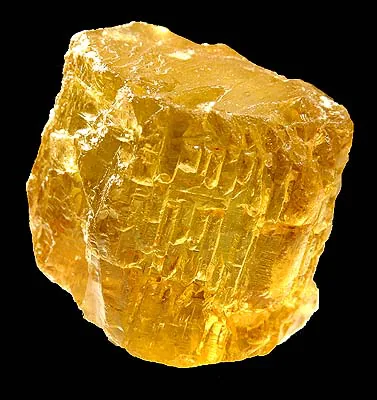
Beryllium is a light, exceptionally stiff, steel-grey metal, prized because it combines very low density and atomic mass with high rigidity, dimensional stability and near-transparency to X-rays. It is strongly lithophile and does not form its own sulphides; in nature it is carried by silicate minerals, chiefly beryl, a beryllium aluminium silicate, together with bertrandite, phenakite and chrysoberyl.
Read more: the deposit model, why it matters and where it is used +
More on beryllium
MineDSS models beryllium through three deposit systems: rare-element granitic pegmatites, greisen zones on granite margins, and volcanic-hosted bertrandite deposits in fluorine-rich rhyolite. Each is tied to highly evolved, volatile-rich felsic magmatism, and each leaves a mappable footprint: altered and veined intrusive or volcanic rocks, characteristic geophysical responses and a distinctive lithophile geochemical halo. That is exactly the pattern a prospectivity model is built to read across large, partly covered terrains.
The deposit model
Beryllium mineralisation concentrates in the most fractionated products of granitic magmatism, where fluxing elements such as fluorine, lithium and boron depress crystallisation and let beryllium build to ore grade. In rare-element (lithium-caesium-tantalum) pegmatites, beryl crystallises in zoned dykes alongside lithium, caesium, tantalum and tin minerals. In greisen systems, fluid escaping a cooling granite cupola alters the apical rock to a quartz-muscovite-topaz-fluorite assemblage, fixing beryllium with tin and tungsten along fractures and cupola margins. Volcanic-hosted deposits form where fluorine-rich hydrothermal fluids leach beryllium from lithophile-rich topaz rhyolite and redeposit it as bertrandite where the fluid reacts with carbonate clasts in tuff, the setting of the world's dominant primary supply.
Why it matters
Beryllium is a strategic, defence-critical metal and appears on the critical-minerals lists of several major economies. Its blend of stiffness, low weight, thermal stability and dimensional precision has no ready substitute in the most demanding applications, and supply is both small in volume and geographically concentrated, with a single country accounting for most of the world's mined output and only a handful of plants able to process ore into finished product. That concentration, set against the metal's role in aerospace, defence and advanced electronics, makes secure and diversified sourcing a genuine national-security concern. Transparent, defensible targeting of prospective ground therefore carries real weight for explorers and for the governments that classify beryllium as strategic and permit its extraction.
Where it's used
The largest use of beryllium is in copper-beryllium and other alloys, where a small addition yields high strength, excellent electrical and thermal conductivity, fatigue resistance and non-sparking, non-magnetic behaviour: the basis of connectors, springs and safety tools for oil, gas and mining. Pure beryllium metal and beryllium oxide ceramics serve aerospace and defence structures, inertial guidance systems, satellite and telescope mirrors, and high-power electronics that must shed heat. Because the metal is nearly transparent to X-rays, it is the standard window material for X-ray tubes, medical imaging and particle detectors, and its neutron behaviour makes it valuable as a moderator, reflector and neutron source in nuclear and fusion research.
Questions
Beryllium: common questions.
Which beryllium deposit types does MineDSS model? +
MineDSS models three deposit systems: rare-element granitic pegmatites, greisen zones on granite margins, and volcanic-hosted bertrandite deposits. Pegmatites host beryl in zoned dykes alongside lithium, caesium and tantalum minerals; greisens fix beryllium with tin and tungsten in quartz-mica-topaz-fluorite alteration on granite cupolas; volcanic-hosted systems precipitate bertrandite where fluorine-rich fluids leach beryllium from topaz rhyolite and react with carbonate-bearing tuff. All three stem from highly evolved, volatile-rich felsic magmatism, which is the footprint the model is built to read. It does not attempt to represent unrelated styles; it ranks ground by how closely its evidence matches ground where samples assay anomalously high for the target mineral.
How is the model tested, and where can I run beryllium? +
Every MineDSS model is tested before it is served: we withhold whole blocks of ground, rebuild the model without them, and check that it still ranks the anomalous samples there above background, with test ground kept spatially separate. A model that does not pass our release gates is not used, for any mineral, in any country. National models for beryllium run in Australia, the United States and Canada, with ranked targets. Anywhere else in the world, the global model returns the prospectivity map, the geology behind it and a confidence read. Skill is model-level, never a specific site's measured accuracy, and never a discovery or JORC / NI 43-101 resource claim.
Which pathfinder elements track beryllium? +
The classic pathfinders are lithium, caesium, rubidium, tin, niobium, tantalum and tungsten, with lithium, caesium and rubidium leading. These are the granophile and high-field-strength elements that concentrate in the same highly fractionated melts as beryllium: lithium, caesium and rubidium track a fertile, fluid-rich granite, while tin, niobium, tantalum and tungsten mark the pegmatite, greisen and rare-metal associations. These elements are part of the geochemical record our models learn from. In a run on any piece of ground, the map itself is read from geology and rock age, gravity and magnetics, radiometrics, terrain, satellite radar and spectral alteration, so it covers ground that has never been sampled.
Does a high MineDSS score mean a deposit or a resource estimate? +
No. A high score means its evidence closely matches ground where samples assay anomalously high for the target mineral, and it merits closer exploration attention. It is not a discovery, not a JORC or NI 43-101 resource or reserve estimate, and not drilling or investment advice. MineDSS ranks prospectivity to help prioritise where to look; confirming whether beryllium is present, and at what grade and tonnage, still requires field programmes, drilling and independent assessment by qualified professionals.
-
Partners
Exploration and mining companies interested in working with us.
-
Investors
The record, the models and the ground they point to.
-
Publishers and researchers
Geological surveys, universities and programmes whose work the record is built on.
MineDSS ranks prospectivity to help you decide where to explore next. It is not a discovery, not a JORC or NI 43-101 resource or reserve estimate, and not drilling or investment advice.