LCT pegmatite
Lithium prospectivityacross Australia, the USA, Canada & worldwide.
Hard-rock (LCT pegmatite) lithium, ranked and explained across Australia, the United States and Canada.
-
 ✓
✓ Australia
Ranked targets
-
 ✓
✓ United States
Ranked targets
-
 ✓
✓ Canada
Ranked targets
- ✓
Everywhere else
Global model
Ranked targets come with national models in Australia, the United States and Canada. Everywhere else, the global model returns the prospectivity map, the geology behind it and a confidence read. Next, the models are retrained on the full record and new sources, such as hyperspectral imagery, before we use them to rank and select ground.
How we rank lithium ground
From a country to a decision.
- 01 · Atlas
Know the ground
The geology, structure, recorded deposits, tenure and geochemistry over the ground, on one map with the source of every layer.
See Atlas - 02 · Open Ground
Find ground you can peg
Which ground is open, held or excluded, read from each licensing authority's own register.
See Open Ground - 03 · Prospectivity
Rank it for lithium
The ground scored for lithium, with the evidence behind it and ranked targets in Australia, the United States and Canada. Anywhere else, the global model maps lithium.
See Prospectivity - 04 · Spectral
Map the alteration
The alteration minerals and the structures that control them, from satellite: regional to district scale, and camp scale from WorldView-3.
See Spectral - 05 · Due Diligence
Check before committing
Tenure, land access, environment and the real cost to hold and test a lithium position.
See Due Diligence -
Talk to us about lithium
Partners, investors, publishers and researchers.
The deposit system
The lithium system.
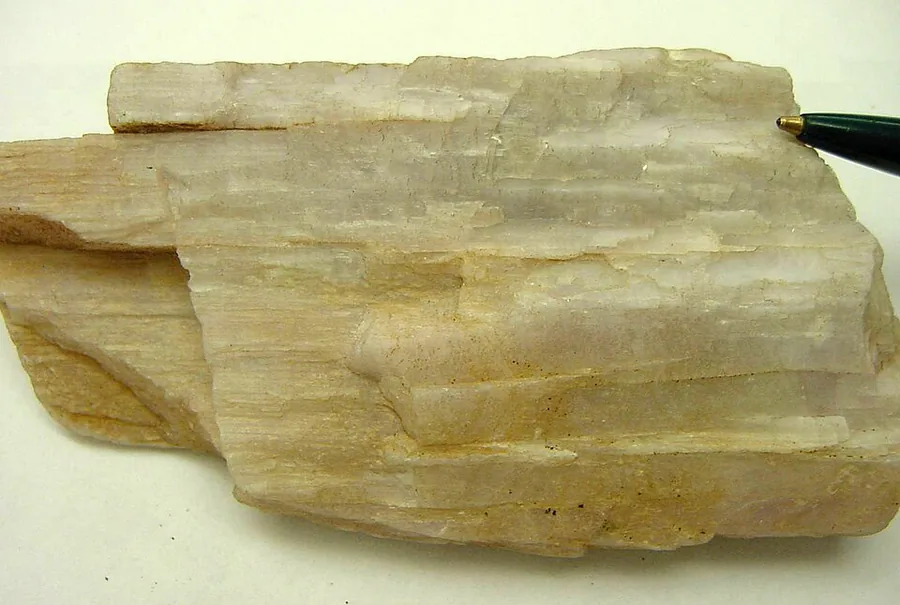
Lithium is the lightest metal, valued for its exceptional electrochemical potential and low density, and now central to energy storage. MineDSS models hard-rock lithium hosted in lithium-caesium-tantalum (LCT) pegmatite systems, the highly fractionated granitic pegmatites that carry spodumene and petalite as the principal ore minerals.
Read more: the deposit model, why it matters and where it is used +
More on lithium
These are the most evolved products of granite crystallisation, enriched in incompatible elements and volatiles. The platform does not model lithium brines from salars or sedimentary-clay lithium; its focus is the crystalline hard-rock resource. The target is the geochemical and geological fingerprint of extreme magmatic fractionation: a rare-element pegmatite signature imprinted on host rocks and their weathering products, distinct from ordinary granitic terrain.
The deposit model
LCT pegmatites form where a fertile, peraluminous parent granite crystallises to extreme fractionation, expelling a residual melt enriched in lithium, caesium, rubidium, tantalum and boron. The resulting dyke and sheet swarms are commonly emplaced into metamorphic country rock at a distance from the parent pluton, following structural weaknesses and contacts. Internal zonation, coarse crystal growth, and spodumene or petalite mineralogy characterise the ore zones.
Why it matters
Lithium is a designated critical mineral in the United States and Canada and the defining input to rechargeable battery chemistry. Demand is driven by the electrification of transport, grid-scale energy storage, and portable electronics, alongside efforts to secure resilient domestic and allied supply chains for battery-grade material. Hard-rock spodumene concentrate is a mature, well-understood feedstock for lithium hydroxide and carbonate production. For governments and producers, identifying prospective ground for LCT pegmatite systems supports both resource security and orderly development of the battery-metals sector.
Where it's used
The dominant end use is rechargeable lithium-ion batteries for electric vehicles, consumer electronics and stationary grid storage, where lithium hydroxide and carbonate serve as cathode and electrolyte precursors. Beyond batteries, lithium compounds are used in glass and ceramics to improve thermal-shock resistance, in high-performance greases and lubricants, in aluminium smelting fluxes, and in specialty glass, casting powders and certain pharmaceutical and air-treatment applications.
Questions
Lithium: common questions.
What lithium deposit types does MineDSS model? +
MineDSS models hard-rock lithium hosted in lithium-caesium-tantalum (LCT) pegmatite systems, the highly fractionated granitic pegmatites that carry spodumene and petalite. It does not model lithium brines from salars or sedimentary-clay lithium; the focus is the crystalline hard-rock resource and its distinctive rare-element geochemical fingerprint.
How is the model tested, and where can I run lithium? +
Every MineDSS model is tested before it is served: we withhold whole blocks of ground, rebuild the model without them, and check that it still ranks the anomalous samples there above background, with test ground kept spatially separate. A model that does not pass our release gates is not used, for any mineral, in any country. National models for lithium run in Australia, the United States and Canada, with ranked targets. Anywhere else in the world, the global model returns the prospectivity map, the geology behind it and a confidence read. Skill is model-level, never a specific site's measured accuracy, and never a discovery or JORC / NI 43-101 resource claim.
Does MineDSS cover lithium brine or clay-hosted lithium? +
No. The platform is focused exclusively on hard-rock lithium in LCT pegmatite systems. Brine deposits in salars and sedimentary-clay lithium have different host settings and geochemical signatures and fall outside the modelled scope.
What does the model read to rank lithium ground? +
Mapped geology (favourable granite-greenstone and metasedimentary settings and structural corridors), geophysics that resolves lithology and structure, radiometrics, terrain, satellite radar and spectral alteration. The models learn from the geochemical record, including the rare-element pathfinders caesium, rubidium, tantalum, niobium, tin and beryllium that signal extreme magmatic fractionation. The output is an explainable ranking, not a resource estimate or drilling advice.
-
Partners
Exploration and mining companies interested in working with us.
-
Investors
The record, the models and the ground they point to.
-
Publishers and researchers
Geological surveys, universities and programmes whose work the record is built on.
MineDSS ranks prospectivity to help you decide where to explore next. It is not a discovery, not a JORC or NI 43-101 resource or reserve estimate, and not drilling or investment advice.