sulphide / sediment-hosted
Selenium prospectivityacross Australia, the USA & worldwide.
Sulphide-hosted and sediment-hosted selenium enrichment, ranked and explained across the United States and Australia.
-
 ✓
✓ Australia
Ranked targets
-
 ✓
✓ United States
Ranked targets
-
 ·
· Canada
Not modelled
- ✓
Everywhere else
Global model
Ranked targets come with national models in Australia and the United States. Everywhere else, the global model returns the prospectivity map, the geology behind it and a confidence read. Next, the models are retrained on the full record and new sources, such as hyperspectral imagery, before we use them to rank and select ground.
How we rank selenium ground
From a country to a decision.
- 01 · Atlas
Know the ground
The geology, structure, recorded deposits, tenure and geochemistry over the ground, on one map with the source of every layer.
See Atlas - 02 · Open Ground
Find ground you can peg
Which ground is open, held or excluded, read from each licensing authority's own register.
See Open Ground - 03 · Prospectivity
Rank it for selenium
The ground scored for selenium, with the evidence behind it and ranked targets in Australia and the United States. Anywhere else, the global model maps selenium.
See Prospectivity - 04 · Spectral
Map the alteration
The alteration minerals and the structures that control them, from satellite: regional to district scale, and camp scale from WorldView-3.
See Spectral - 05 · Due Diligence
Check before committing
Tenure, land access, environment and the real cost to hold and test a selenium position.
See Due Diligence -
Talk to us about selenium
Partners, investors, publishers and researchers.
The deposit system
The selenium system.
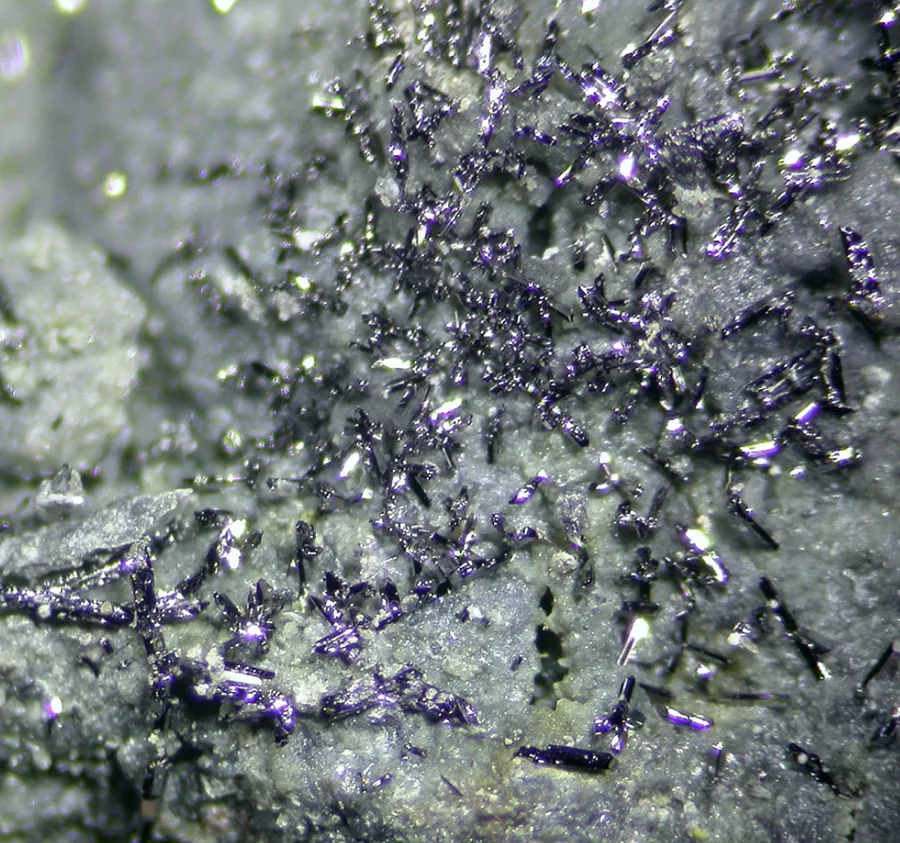
Selenium is a chalcophile metalloid, chemically similar to sulphur, and it very rarely forms minerals of its own. Instead it substitutes for sulphur within the lattice of common sulphide minerals, and where it does crystallise as discrete selenides these are species such as clausthalite, naumannite and tiemannite.
Read more: the deposit model, why it matters and where it is used +
More on selenium
Almost all commercial selenium is recovered indirectly, as a by-product of the electrolytic refining of copper, where it accumulates in anode slimes. MineDSS models selenium through two host families: sulphide and sediment-hosted systems. Each concentrates selenium by a distinct mechanism (one by chemical substitution in metal sulphides, the other by redox precipitation in reduced sediments), and each leaves a mappable geochemical and geological footprint that a prospectivity model is built to read across large, partly covered terrains.
The deposit model
The two systems enrich selenium through very different pathways. In sulphide systems, selenium follows sulphur into the crystal structure of base-metal sulphides emplaced by magmatic-hydrothermal fluids, most importantly the copper-bearing sulphides of porphyry and related deposits, which is why the metal is ultimately won from copper refinery residues. Sediment-hosted enrichment is redox-controlled: selenium is soluble as selenate and selenite in oxidising groundwater and precipitates as native selenium or metal selenides where that fluid meets a reductant, so it concentrates in a narrow band at the redox front of reduced sediments, including organic-rich shales, phosphorites and roll-front sandstone systems.
Why it matters
Selenium is an economically significant minor metal with no mine of its own: essentially all of it arrives as a by-product of copper electrorefining, so its supply is structurally tied to copper output and concentrated in the handful of nations with major refining capacity. That dependence, together with rising demand from thin-film solar photovoltaics and electronics, makes secure and diversified access a genuine concern for industry and government, even though selenium is not formally designated a critical mineral in the United States. Because the metal cannot be targeted by sinking a dedicated mine, understanding where selenium is naturally enriched, and which copper and sediment-hosted systems carry it, supports both by-product recovery planning and resource assessment for enterprise and public-sector stakeholders.
Where it's used
The largest uses of selenium are in metallurgy and glassmaking. As an additive it improves the machinability of free-cutting steels and copper alloys and is consumed in the electrolytic production of manganese, while in glass it both decolourises the green tint of iron impurities and produces red and bronze tints and solar-control coatings. Selenium is central to thin-film copper indium gallium diselenide solar cells and has a long history in electronics as a photoconductor and rectifier material. It also serves as an essential trace nutrient in animal feed and fertiliser, and as a feedstock for pigments and speciality chemicals. These varied roles keep demand broad-based across industrial and energy markets.
Questions
Selenium: common questions.
Which selenium deposit types does MineDSS model? +
MineDSS models selenium through two host families: sulphide systems and sediment-hosted systems. In sulphide systems selenium substitutes for sulphur in base-metal sulphides, above all the copper sulphides of porphyry and related deposits, from which it is later recovered as a copper-refining by-product. In sediment-hosted systems it is redox-controlled, precipitating as native selenium or selenides in a narrow band at the reducing front of organic-rich shales, phosphorites and roll-front sandstone systems. The model ranks ground for selenium enrichment rather than a single deposit style: it learns from samples assaying at or above 5 ppm selenium.
How is the model tested, and where can I run selenium? +
Every MineDSS model is tested before it is served: we withhold whole blocks of ground, rebuild the model without them, and check that it still ranks the anomalous samples there above background, with test ground kept spatially separate. A model that does not pass our release gates is not used, for any mineral, in any country. National models for selenium run in Australia and the United States, with ranked targets. Anywhere else in the world, the global model returns the prospectivity map, the geology behind it and a confidence read. Skill is model-level, never a specific site's measured accuracy, and never a discovery or JORC / NI 43-101 resource claim.
Which pathfinder elements track selenium? +
The classic pathfinders are copper, molybdenum, uranium, arsenic, silver and vanadium, with copper, molybdenum and uranium leading. Copper reflects the base-metal sulphide hosts that concentrate selenium; molybdenum, uranium and vanadium share its redox chemistry and co-precipitate at the reducing fronts of sediment-hosted systems; and arsenic and silver track the associated sulphide and selenide mineralogy. These elements are part of the geochemical record our models learn from. In a run on any piece of ground, the map itself is read from geology and rock age, gravity and magnetics, radiometrics, terrain, satellite radar and spectral alteration, so it covers ground that has never been sampled.
Does a high MineDSS score mean a deposit or a resource estimate? +
No. A high score means its evidence closely matches ground where samples assay anomalously high for selenium, and it merits closer exploration attention. It is not a discovery, not a JORC or NI 43-101 resource or reserve estimate, and not drilling or investment advice. MineDSS ranks prospectivity to help prioritise where to look; confirming whether selenium is present, and in what quantity and grade, still requires field programmes, sampling and independent assessment by qualified professionals.
-
Partners
Exploration and mining companies interested in working with us.
-
Investors
The record, the models and the ground they point to.
-
Publishers and researchers
Geological surveys, universities and programmes whose work the record is built on.
MineDSS ranks prospectivity to help you decide where to explore next. It is not a discovery, not a JORC or NI 43-101 resource or reserve estimate, and not drilling or investment advice.