zinc-sulphide / coal-hosted
Germanium prospectivityacross Australia, the USA, Canada & worldwide.
Germanium in zinc-sulphide and coal-related host systems, ranked and explained across Australia, the United States and Canada.
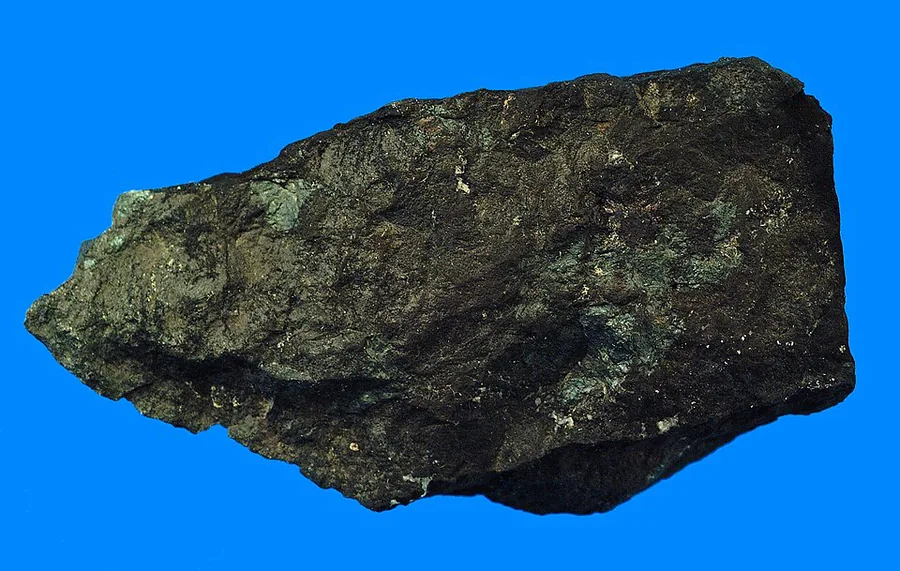
-
 ✓
✓ Australia
Ranked targets
-
 ✓
✓ United States
Ranked targets
-
 ✓
✓ Canada
Ranked targets
- ✓
Everywhere else
Global model
Ranked targets come with national models in Australia, the United States and Canada. Everywhere else, the global model returns the prospectivity map, the geology behind it and a confidence read. Next, the models are retrained on the full record and new sources, such as hyperspectral imagery, before we use them to rank and select ground.
How we rank germanium ground
From a country to a decision.
- 01 · Atlas
Know the ground
The geology, structure, recorded deposits, tenure and geochemistry over the ground, on one map with the source of every layer.
See Atlas - 02 · Open Ground
Find ground you can peg
Which ground is open, held or excluded, read from each licensing authority's own register.
See Open Ground - 03 · Prospectivity
Rank it for germanium
The ground scored for germanium, with the evidence behind it and ranked targets in Australia, the United States and Canada. Anywhere else, the global model maps germanium.
See Prospectivity - 04 · Spectral
Map the alteration
The alteration minerals and the structures that control them, from satellite: regional to district scale, and camp scale from WorldView-3.
See Spectral - 05 · Due Diligence
Check before committing
Tenure, land access, environment and the real cost to hold and test a germanium position.
See Due Diligence -
Talk to us about germanium
Partners, investors, publishers and researchers.
The deposit system
The germanium system.
Germanium is a lustrous, brittle metalloid valued as a semiconductor and for its near-total transparency to infrared light. It is rarely mined in its own right; economic germanium is won as a companion element, hosted principally in zinc-sulphide ores and in low-rank coal.
Read more: the deposit model, why it matters and where it is used +
More on germanium
In sulphide systems it substitutes into the sphalerite lattice, and less commonly forms rare copper-germanium minerals such as germanite and renierite; in coal and lignite it is bound to organic matter and concentrated in the resulting ash. MineDSS models germanium through the two host families that actually carry it: zinc-sulphide-hosted and coal-related systems. Each leaves a mappable footprint: sphalerite-bearing sulphide bodies or germanium-enriched coal measures with a distinctive multi-element geochemical halo. That is exactly the pattern a prospectivity model is built to read across large, partly covered terrains.
The deposit model
Germanium enrichment in both families is governed by low-temperature fluid chemistry and organic matter rather than magmatic heat. Zinc-sulphide host systems span carbonate-hosted (Mississippi Valley-type) and related lead-zinc replacement bodies, sediment-hosted lenses and volcanogenic massive sulphide deposits; in these, low-temperature, high-salinity basinal brines precipitate sphalerite into which germanium partitions, so that cooler deposits tend to carry the richest germanium while warmer systems favour indium. Coal-related host systems concentrate germanium where groundwater or hydrothermal fluids carry it into peat and low-rank coal at basin margins, binding it to organic matter and enriching the ash.
Why it matters
Germanium is designated a critical or strategic mineral across the United States, the European Union and Canada, because a small annual tonnage underpins outsized strategic capabilities and because supply is highly concentrated. Most of the world's refined germanium originates from a single country, and export licensing introduced in recent years has sharpened concern over secure access for downstream industries. Because germanium is recovered as a by-product of zinc refining and coal combustion rather than mined directly, its availability is tied to those host industries, which makes transparent, defensible identification of germanium-enriched ground strategically valuable to both explorers and the governments working to secure supply chains for optics, defence and semiconductors.
Where it's used
Germanium's largest use by volume is in fibre-optic cable, where germanium dioxide dopes the glass core to raise its refractive index and carry high-bandwidth signals over long distances. Its transparency to infrared light makes it the material of choice for thermal-imaging and night-vision optics, lenses and windows used in defence, security and, increasingly, vehicle sensing. As a semiconductor it appears in silicon-germanium high-speed electronics and as the substrate for the high-efficiency multi-junction solar cells that power satellites. Germanium compounds also serve as polymerisation catalysts, notably for PET plastics, and in specialty phosphors and high-refractive-index optical glass.
Questions
Germanium: common questions.
Which germanium deposit types does MineDSS model? +
MineDSS models germanium through the two host families that actually carry it: zinc-sulphide-hosted systems and coal-related systems. The zinc-sulphide hosts span carbonate-hosted (Mississippi Valley-type) and related lead-zinc replacement bodies, sediment-hosted lenses and volcanogenic massive sulphide deposits, in which germanium substitutes into sphalerite. Coal-related hosts concentrate germanium in low-rank coal and lignite, bound to organic matter. Germanium is rarely mined for its own sake. It is recovered as a companion element from zinc refining and coal combustion, so the model ranks ground by how closely its evidence matches ground where samples assay anomalously high for the target mineral.
How is the model tested, and where can I run germanium? +
Every MineDSS model is tested before it is served: we withhold whole blocks of ground, rebuild the model without them, and check that it still ranks the anomalous samples there above background, with test ground kept spatially separate. A model that does not pass our release gates is not used, for any mineral, in any country. National models for germanium run in Australia, the United States and Canada, with ranked targets. Anywhere else in the world, the global model returns the prospectivity map, the geology behind it and a confidence read. Skill is model-level, never a specific site's measured accuracy, and never a discovery or JORC / NI 43-101 resource claim.
Which pathfinder elements track germanium? +
The classic pathfinders are zinc, lead, copper, arsenic, antimony, tungsten and molybdenum, with zinc, lead and copper leading. Zinc and lead mark the sphalerite and galena that host germanium in sulphide ores; copper flags the copper-germanium sulphides, such as germanite and renierite, and the replacement systems that carry it; arsenic and antimony trace the associated sulphosalt chemistry, while tungsten and molybdenum reflect the coal-measure associations. These elements are part of the geochemical record our models learn from. In a run on any piece of ground, the map itself is read from geology and rock age, gravity and magnetics, radiometrics, terrain, satellite radar and spectral alteration, so it covers ground that has never been sampled.
Does a high MineDSS score mean a germanium deposit or a resource? +
No. A high score means its evidence closely matches ground where samples assay anomalously high for the target mineral, and it merits closer exploration attention. It is not a discovery, not a JORC or NI 43-101 resource estimate, and not drilling or investment advice. Because germanium is a companion element recovered as a by-product, confirming whether it is present in recoverable quantity and grade requires characterisation of the zinc-sulphide or coal host, field programmes, drilling and independent assessment by qualified professionals. MineDSS ranks prospectivity to help prioritise where to look.
-
Partners
Exploration and mining companies interested in working with us.
-
Investors
The record, the models and the ground they point to.
-
Publishers and researchers
Geological surveys, universities and programmes whose work the record is built on.
MineDSS ranks prospectivity to help you decide where to explore next. It is not a discovery, not a JORC or NI 43-101 resource or reserve estimate, and not drilling or investment advice.